
wolfram ullrich_ constructive ambiguity and the activation of space
02 sep - 30 oct_ 2026
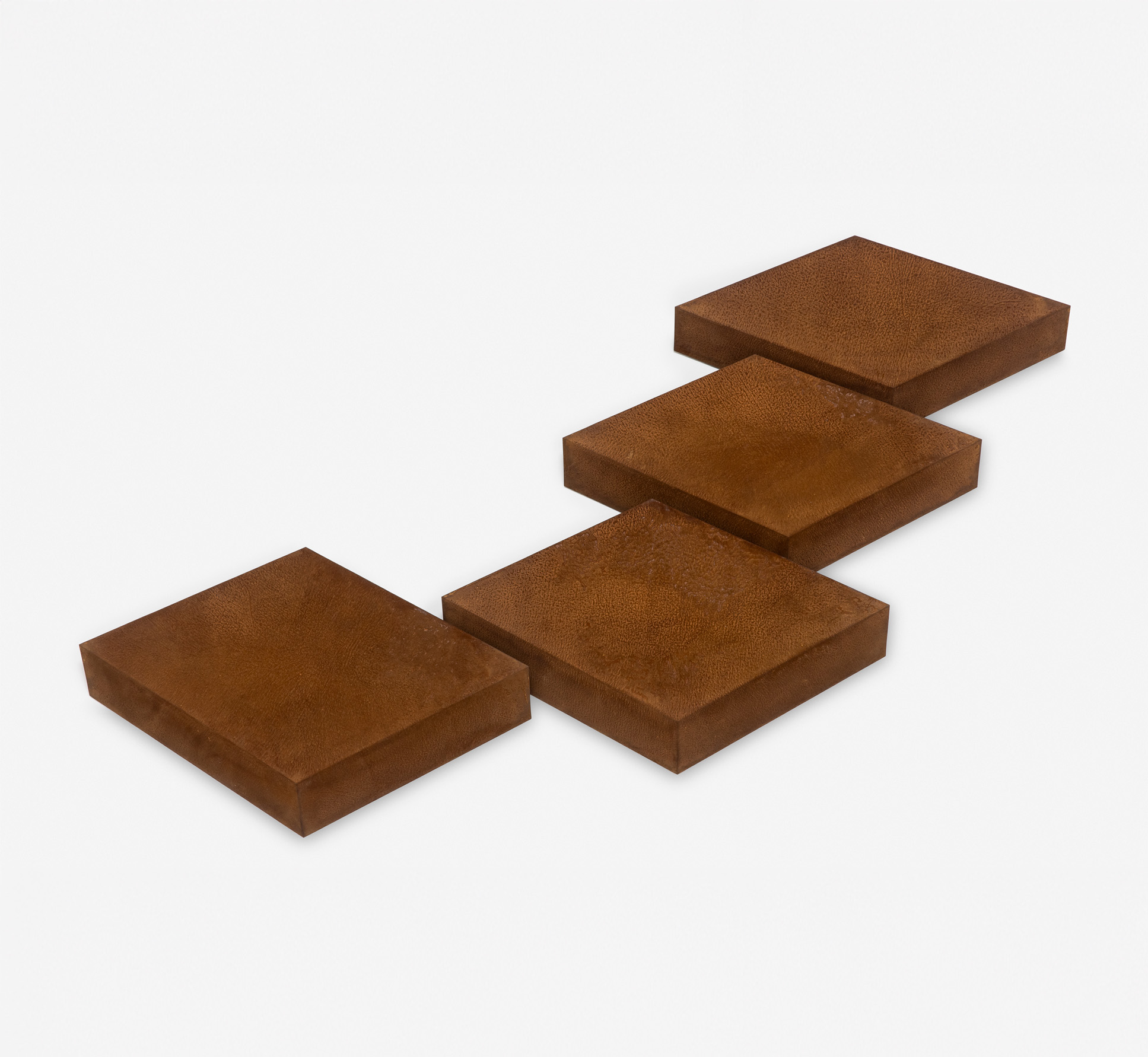
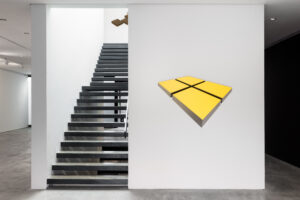
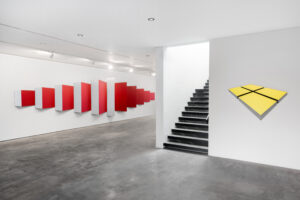
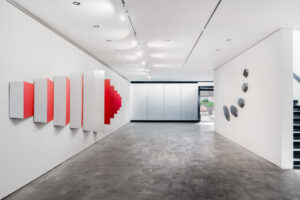
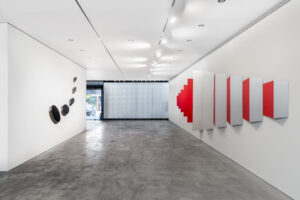
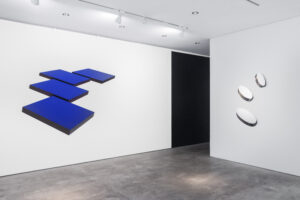
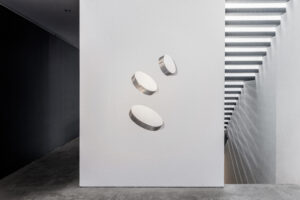
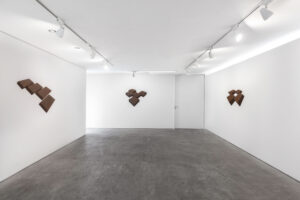
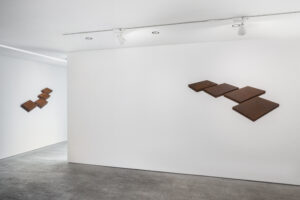
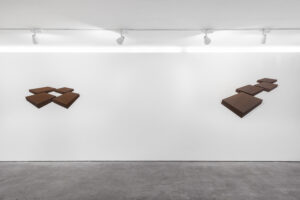
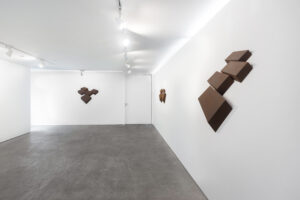
From September 2 to October 30, the exhibition “Constructive Ambiguity and Activation of Space”, with a critical text by Guilherme Wisnik, brings together a selection of new works by Wolfram Ullrich that embrace illusionism as a means of actively exploring the relationship between object and environment. Made of rigid materials such as steel, Ullrich’s monochromatic surfaces bear witness not only to their own unwavering materiality, but also to the optical phenomena that subject the works to each viewer’s shifting perspective, making them appear to float in space.
Constructive Ambiguity and the Activation of Space
Critical text_ Guilherme Wisnik
Shallow reliefs create the illusion of a deep, perspectival space. We need to approach them in order to understand that this is not a two-dimensional pictorial effect, but rather a set of actual volumes that project slightly from the wall. The intense, unequivocal red gives corporeality to the serial ensemble, but not expressiveness. Architectural in scale, the work foregrounds the very existence of the wall as support, and its neutrality, as well as the presence of the gallery staircase directly opposite it. In this sense, it presents itself as site-specific, although specificity is not a condition of the work’s existence.
German artist Wolfram Ullrich brings the tradition of geometric abstraction into a contemporary register. An heir to both the Bauhaus and the Ulm School, he shares many affinities with American Minimal Art, while remaining unbound by its literalism. That is, his work is far removed from the philosophical solipsism that links the radical exteriority of forms and materials to a kind of microphysics of power, according to which, in a fully administered world, all that remains for us to do is to orchestrate exteriorities and make explicit the death of the subject.
What I consider fundamental, particularly in his larger-scale works, is the movement that viewers’ bodies are required to make around them, activating perception as a continuous process. In other words, his central concern is perceptual instability and partiality, since there is no privileged point of view from which to observe these works and, therefore, no stable form through which to recognize them.
Wolfram Ullrich works with industrial materials that are smooth, polished, and precise. We find in his practice no trace of the survival of an artisanal or expressive affect. Yet whereas the “Specific Objects” of American Minimal Art attest to the crisis of painting in the 1960s and 1970s and to its reconfiguration as volume and space, Ullrich’s relief paintings do not reject illusionism. On the contrary, they embrace it as a means of actively understanding the relationship between object and environment. Their aim is not to deceive the eye through visual devices—distancing them both from Op Art and, for example, from contemporary immersive installations made with light and smoke. Nor, however, do they seek to eliminate the ambiguity inherent in processes of perception and cognition.
We live in a world in which real and virtual spaces are becoming increasingly entangled, given the omnipresence of cyberspace and the technological manipulations enabled by artificial intelligence. In this context, any defense of an anti-illusionist literalism would today appear clearly naive. Grounded in a rationalist and constructive framework, Wolfram Ullrich’s works do not shy away from incorporating the complexities of the world; instead, they invest in active perception as an instrument for reflection and for positioning subjects in relation to the intricate webs of relationships that surround us.
exhibitions images