

arco madrid 2026
4 - 8 mar_ 2026
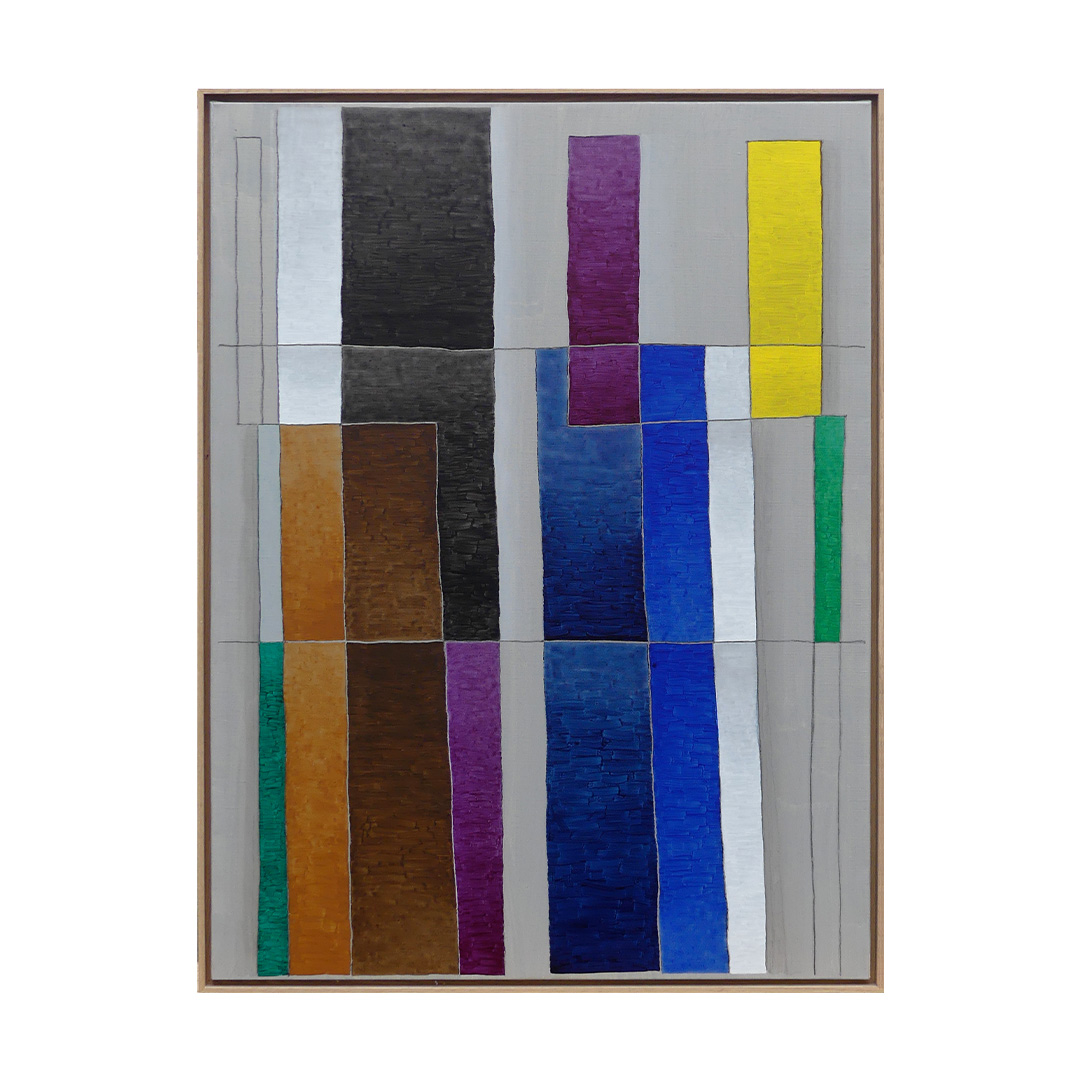
For ARCO Madrid 2026, Galeria Raquel Arnaud presents a profound and intriguing dialogue between the practices of Marina Weffort and Jullio Villani, addressing themes such as structure, materiality, and the creation of order, but through inverse artistic processes. While Weffort explores subtraction, Villani constructs his compositions through addition and layering. This duality not only enriches their individual poetics but also creates a common field for reflection on resilience and fragility in art. Marina Weffort’s poetics are rooted in family memory and the feminine textile tradition. Her process, described as ”un-weaving”, is an act of patience and discipline. By unravelling the fabric thread by thread, she reveals a structure that, paradoxically, becomes stronger through its flexibility. Weffort inverts the constructive logic where rigidity is the foundation, to show that resistance can lie in the ability to adapt. Her work with fabric challenges the solidity of sculpture and the two-dimensionality of drawing. The artist holds and releases threads and lines, creating empty spaces that organize themselves with the full ones, a subtle echo of Agnes Martin’s philosophy.
Julio Villani, on the other hand, is a “bricoleur” who finds order in chance and overlay. In his collages on 19th-century manuscripts, he subverts the traditional hierarchy between text and image. In his paintings, referred to by the artist as “Collapsible architectures”,formed by fragile lines and fields of color that make us imaginetemporary, unstable, impermanent constructions reminiscent of Volpi’s tempera. The erasure and accumulation are not errors, but rather parts of a process of searching for a “better form” that is never definitive. Just as in Marina’s work, a memory remains in his pieces, the suggestion of a material that was once something else.
When sharing an exhibition space, the relationship between Weffort and Villani exists on a conceptual level, where their opposing approaches complement each other. Weffort dematerializes the structure, while Villani builds structures that are intentionally fragile and impermanent. The hardness of reinforced concrete is replaced by the flexibility of fabric and the instability of canvas and charcoal. Weffort’s meticulous and repetitive process finds an echo in Villani’s accumulation of layers and “erasures”. Although from different generations, Weffort and Villani engage with geometric abstraction, an emphasis that Galeria Raquel Arnaud values. The duality of their works provide the viewer with a broader glimpse of Brazilian art, this proposal aims to highlight each artist’s unique work, while also offering a chance to explore their individual creative processes.
Giulia Baitz